Seasonal Income and Bank Statement Loans in Colorado

For many self-employed professionals in Colorado, from contractors who peak in the summer building season to mountain resort workers who thrive in the winter, your annual income is strong, but your monthly cash flow fluctuates. This is the exact point where traditional mortgages fail. A conventional lender sees zero income for four months of the…
Read MoreInvestment Property Loan Rules: Conventional vs Non-QM and Fannie Mae Rental Limits

Understanding Investment Property Loan Rules in Colorado Investment property loan rules are very different from owner-occupied mortgage guidelines, and they become even more important as your rental portfolio grows. Real estate investors in Centennial, Denver, Parker, Castle Rock, and across Colorado often ask how many properties they can finance, what income counts, and when conventional…
Read MoreNon-QM Loans vs. Subprime: The Ability-to-Repay (ATR) Rule Explained

If you are a self-employed business owner or a real estate investor in the Denver metro area, you may have found your perfect mortgage solution in the world of Non-QM loans. They offer the flexibility you need to qualify without W-2s or conventional income documents. However, the term “Non-QM” sometimes raises a red flag for…
Read MoreS-Corp vs. LLC: Which Business Structure Eases Mortgage Qualification?

If you are a successful self-employed professional, you already understand the delicate balancing act: you want to minimize your taxable income to save money on taxes, but you need to maximize your qualifying income to secure the best mortgage. The legal and tax structure you choose for your business—specifically, an S-Corporation (S-Corp) versus a Limited…
Read More12-Month vs 24-Month Bank Statement Loans: Which Helps You Qualify

If you are a self-employed professional, freelancer, or business owner in Colorado, you know your income is not a neat, stable number on a W-2. It rises, it falls, and it often has seasonal swings. That’s why the Bank Statement Loan is the perfect solution, it looks at your actual cash flow, not your tax…
Read MoreThe Asset Depletion Formula: Calculating Your Qualifying Income for a Mortgage

The asset depletion formula is used by lenders to convert verified assets into a qualifying monthly income for mortgage approval. This approach is helpful for retirees, early retirees, and borrowers with strong assets but limited traditional income. What many buyers do not realize is that asset depletion calculations are allowed not only in Non-QM lending,…
Read MoreBusiness vs. Personal Bank Statements: Which Account Should Self-Employed Borrowers Use in Colorado?

If you are self-employed and considering a Bank Statement Business vs Personal approach in Colorado, choosing the right account type can directly impact how much income you qualify with. This decision is often overlooked early on, but it plays a major role in how lenders analyze risk and cash flow for bank statement loans. Bank…
Read MoreWhat Deposits Count as Income for a Bank Statement Loan?

If you are a self-employed professional in Colorado, you already know that tax write-offs are your best friend – until you apply for a traditional mortgage. Your net income after deductions rarely reflects your true cash flow, which is why Bank Statement Loans are such a game-changer. Instead of W-2s and tax returns, these Non-QM…
Read MoreDSCR Loan for LLC: Maximize Liability and Asset Protection
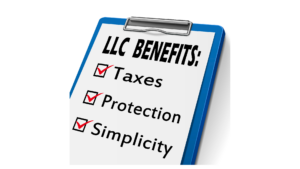
One of the most powerful questions a real estate investor must answer before closing on a new property is: “Who should officially own this asset?” For investors using the Debt Service Coverage Ratio (DSCR) loan, the answer affects everything from asset protection and liability to lender requirements and exit strategy. Unlike traditional mortgages that often…
Read MoreDSCR Loan Prepayment Penalties: Why Investors Choose Them

As a seasoned real estate investor in Colorado, you know that the best deals are made at the closing table. While DSCR loans offer incredible flexibility such as no personal income verification and closing in an LLC, they almost always come with a feature that conventional loans do not: a Prepayment Penalty (PPP). A prepayment…
Read More


